PSL Scout
Marketplace for NFL Personal Seat Licenses
Some details of this project are under an NDA, so I keep the description high-level out of respect for the client.
Process
Research
Benchmarking resale platforms and analyzing existing usage data. Part of that research included understanding how users talk about their favorite teams, the difference between sports scouting language and casual social media language, to design the watchlist/favorites feature with the right terminology.
Constraints
Only one competitor in the market is licensed to use official NFL team logos; we aren't. That meant solving the feeling of "this is your team's marketplace" with other visual elements (colors, iconography, typography) instead of relying on the real logo.
Iterations
The seat map and the negotiation flow went through several versions before reaching the final solution.
Decisions & trade-offs
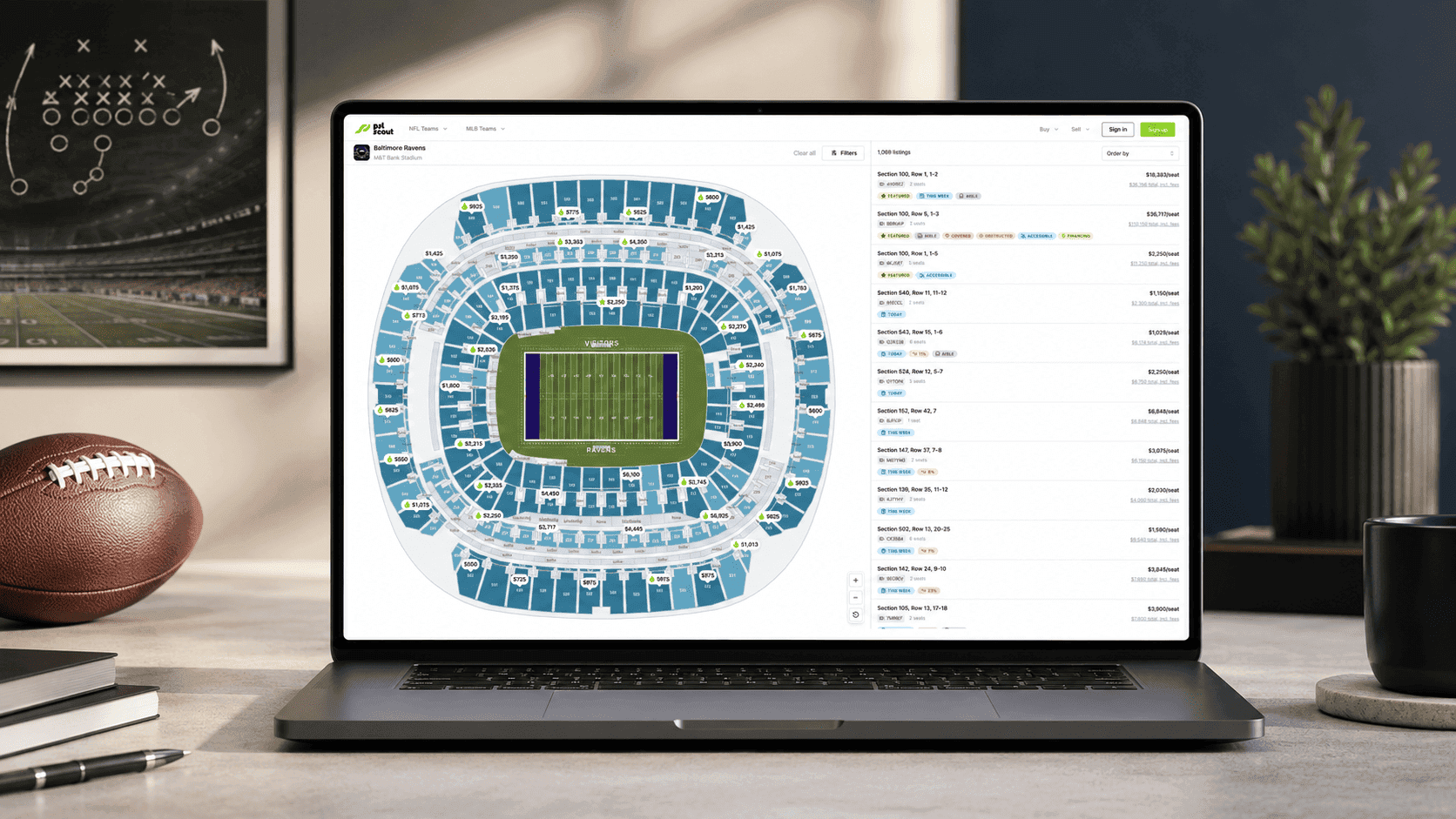
One of the clearest decisions came out of A/B testing: we tested showing seat information in a summary card against an interactive map where the user sees and selects the individual seat inside the stadium. The map won on clarity, the real location is easier to understand when you visualize it spatially than when you read it as a list of data.
Validation
A/B testing between design variants before locking in the final version of each feature.
Final solution
The product ended up including real-time chat for direct negotiation between buyer and seller, an interactive stadium-level seat map, an AI concierge to capture new leads, and real-time visibility into the status of documentation, offers, and counteroffers during negotiation.
Result
The platform went from 0 sales to 10+ closed sales after the redesign, the result of a team effort between design, product, and marketing, but with research and UX writing as a central part of building the trust that was missing.
Takeaway
No design guarantees it'll work before you put it to the test. What you can control is how fast you turn that into real data, with real users, and what you do with what it tells you: improve what you already have or propose something completely different. Changing direction with data in hand isn't a delay, it's part of the process.